
Buying a Used or Gray-Market Watch: What to Check Before You Buy
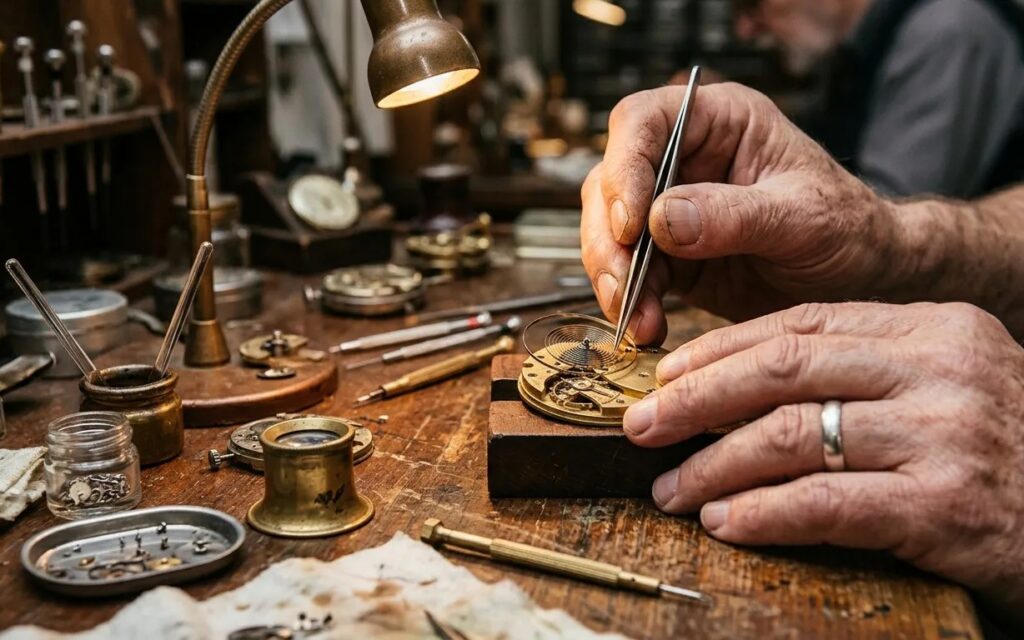
Most of my collection did not come from an authorized dealer, and I am not embarrassed about that. It came from eBay, from gray market dealers, from resale sites, and from late night Facebook Marketplace scrolling. That is where the value is if you collect on a normal person budget. But the discount only survives if you know what you are buying, because in the used and gray market the homework is the whole game. Nobody is going to do it for you.
Gray market first, because people confuse it with fake and it is not fake. A gray market watch is a genuine watch sold outside the brand’s official dealer network. It got to the seller through a side door, usually an authorized dealer somewhere in the world moving extra stock, and it gets resold cheaper. The watch in the box is the same watch. What changes is the warranty. Instead of the manufacturer’s warranty, you often get the seller’s own warranty, which is only as good as that seller. I have bought gray market more than once and would do it again tomorrow, but I read the seller’s warranty terms like a contract, because that is what they are. Know whose promise you are actually holding.
Used is a different animal. There is no standard grading system, so when one seller says excellent and another says mint, those words mean whatever each of them wants them to mean. Ignore the adjective and look at the evidence. I want clear photos of the actual watch, in real light, dial, case sides, clasp, case back. Blurry photos are a decision, not an accident. Then I ask questions and I pay attention to how they get answered. Has it been serviced, and when. Does it come with the full bracelet or are links missing. Box and papers or not. How is it running, fast, slow, how many seconds a day if they know. A seller who knows his watch answers all of that without blinking. A seller who gets vague is telling you something too.
More than the watch, you are buying the seller. I would rather pay a fair price to a dealer with ten years of feedback than chase the cheapest listing from an account created last month. On eBay I read the negative reviews, not just the score, because the score hides the pattern. On Marketplace I buy local when I can, meet in a public place, put the watch in my hand before any money moves, and walk away if anything feels off. Local deals are where the real steals live, but only because you can verify with your own eyes.
Then do the unglamorous math nobody does. A used automatic that has never been serviced is a watch plus a service bill, usually a couple hundred dollars, and you should price it that way. An older diver needs its seals checked and pressure tested before it goes near water. Missing bracelet links cost money to replace if they exist at all. Half the bad used purchases I see are not scams, they are watches that looked twenty percent cheap and needed thirty percent worth of attention.
One example explains why I bother. A Shinola Runwell 47mm is $675 at retail. On the used market, clean ones trade between $215 and $275 all day long. That is not a small discount, that is a different hobby at a different price. The catch is everything above. The one at $215 with dark photos and a seller who will not answer questions is not cheaper than the one at $260 from a seller who sends you twelve pictures and the service history. It is more expensive. It just collects the money from you later.
So my rule is simple. Used and gray is where I shop, and I think it is where most collectors should shop. But the discount is payment for the work. Do the work, check the seller, price in the service, and you will end up with better watches than your budget says you deserve. Skip the work and the market will teach you the same lessons at full price.